
In exploring consciousness and nature of reality, you eventually have to deal with organized religion and its impact on perception and reality. Which for me, means dealing with Jesus.

I grew up in a very conservative Christian 80s and 90s in the Midwest. Flannelgraph Jesus was how I first met him and Awana on Wednesday night was the most lit party (iykyk). This evolved to high school youth group. Then I went to a Christian college. Through early adulthood I volunteered at a mega church. We did "life groups". But when it came to Christ, there was no place for mystery. (Unless of course the mystery was a Christian novel by a Christian author sold by the Christian Media Industry.) It was all buttoned up nice and neat with a bow and plenty of guilt if you ever questioned it or felt it wasn't quite right.
Now that Jesus has been more or less reduced to a political mascot, it raises a lot of new questions about him. And his divine source. Questions I don't mind asking since the generation that introduced me to him has largely turned their back on his core teaching and cherry picked their Bible themes to pad their modern comfort zones.
Western Christianity doesn't own the conversation about Jesus. They dominate the messaging and legal application. No figure in history has this much documentation, this level of scrutiny, or this many radically different interpretations.
If this sounds a little axe-grindy, you're not wrong. But stick with me.
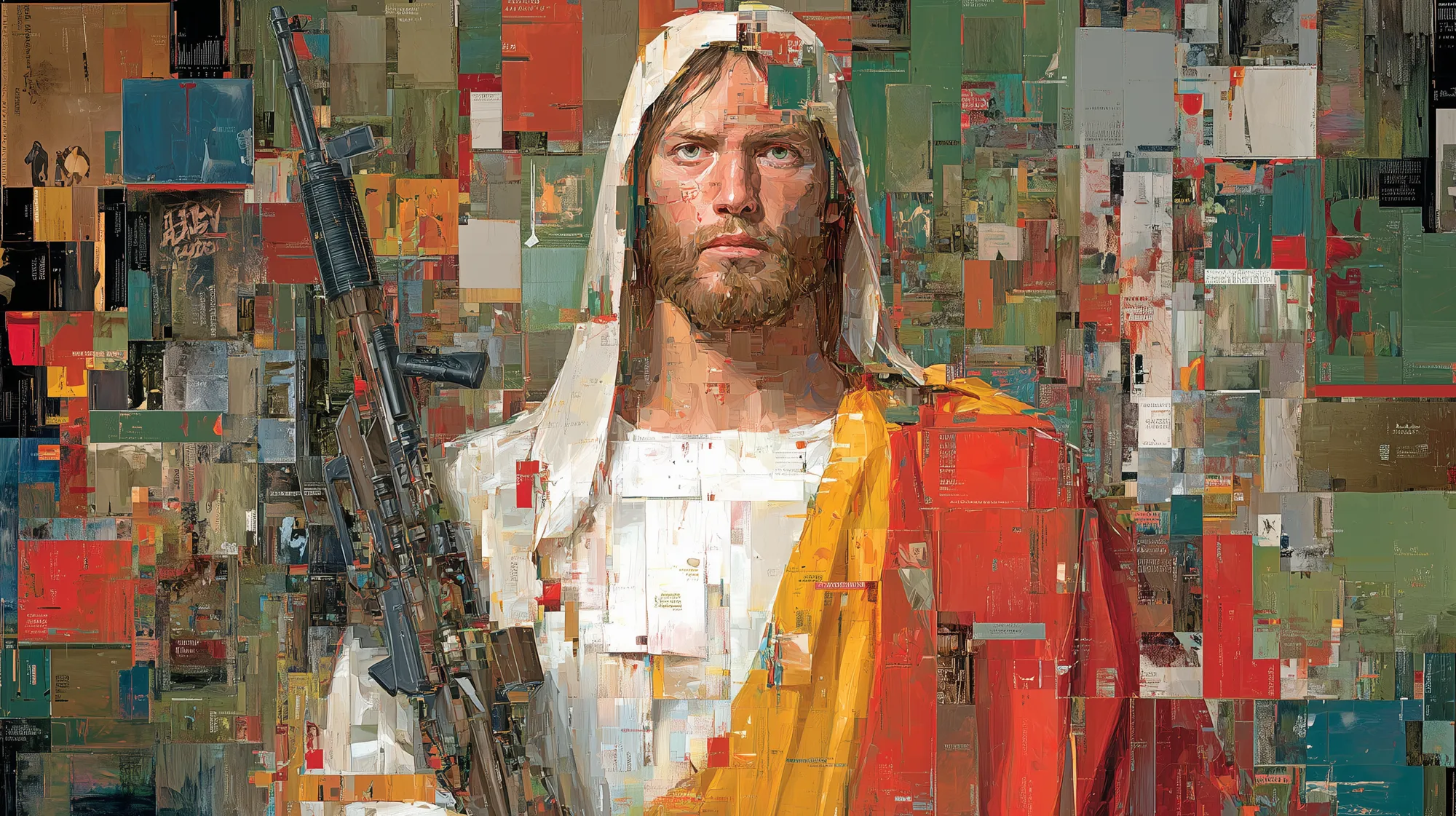
His existence isn't debated among serious scholars. The documentation is unusually strong, including sources that had every reason to discredit him. Sources that were once regarded as heretical or illegitimate (off brand, shall we say?) I now find intriguing.
The Roman historian Tacitus1 (116 CE) tells of "Christus" executed under Pontius Pilate. Jewish historian Josephus2 (93 CE) described Jesus as a "wise man" performing "surprising deeds." The Talmud3 - hostile Jewish source nonetheless - confirms his life, performing what they called sorcery, and his execution.
Then there are the Gospels, Gnostic texts, Paul's letters (written within 20 years of the crucifixion), Islamic sources, Coptic traditions. For comparison: Buddha's earliest accounts were written 400 years after his death. Muhammad's first biography appeared 120 years later.
Jesus has contemporary hostile attestation.4 That's incredibly rare.
Multiple early sources describe core elements: revolutionary teaching, healing witnessed by contemporaries, crucifixion, and followers claiming post-death appearances. But unlike Buddha, Muhammad, Moses, Confucius, or Guru Nanak — all of whom explicitly claimed to be human — the Jesus tradition claims divinity. "I AM the way. Before Abraham was, I AM."
Every other figure — prophets, teachers, enlightened beings, yes… but not God.
Jesus accepted worship, claimed authority to forgive sins, said "I and the Father are one." That's either history's most important claim or complete delusion.
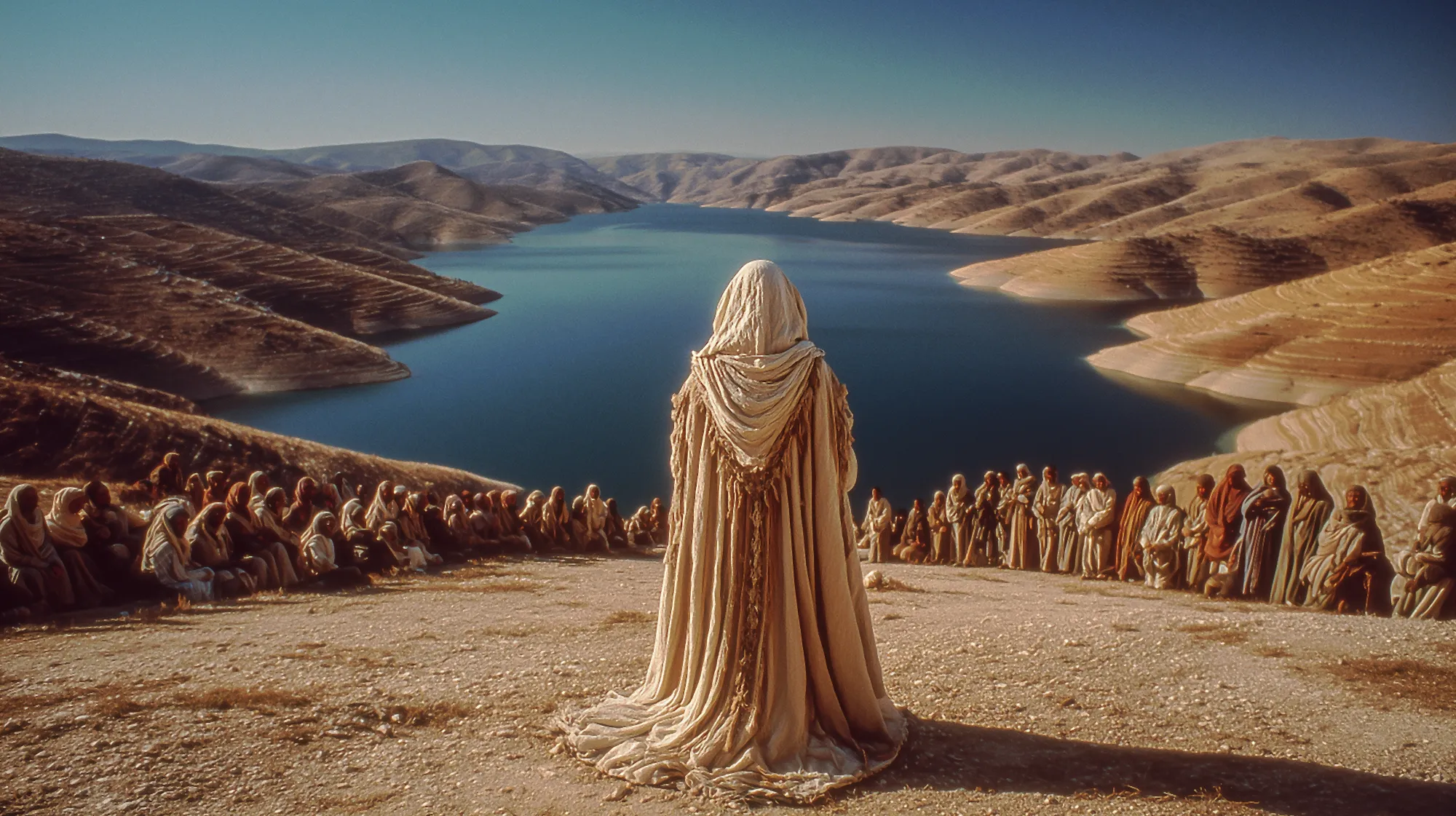
Christian culture sanitized the narrative over time. It's not even a little bit hard to imagine as I look at what's happening in the world today. The constant rewriting of history. The inability to look at facts and truth with acceptance.
The Infancy Gospel of Thomas5 (early Christian apocryphal text) describes Jesus as a child with uncontrolled power - shaping clay birds and breathing life into them, striking other children dead in anger then raising them, cursing teachers who disciplined him. These are accounts of someone learning to manage conscious abilities beyond normal human capacity.
Then there's the 18-year gap. Luke tells of Jesus at 12 in the Temple. Then silence until he reappears at age 30 in Jordan River with John the Baptist.
Theories range from him working as a carpenter in Nazareth to studying with Eastern mystics in India. Mainstream scholars dismiss the India claims, but he comes back demonstrating consciousness manipulation, energy healing, matter multiplication, and raising the dead.
Consider his miracles differently for a second — not as proof of unique divinity, but as demonstrations of consciousness affecting physical reality. That framing used to sound absurd. Less so now.
Researchers at institutions like UVA's Division of Perceptual Studies6 are documenting cases that challenge the assumption consciousness requires a living brain. Biofield researchers are measuring energy effects during healing practices that weren't detectable a generation ago. None of this proves Jesus was doing what the Gospels describe — but the boundary between "impossible" and "not yet understood" keeps moving.
Then consider what he actually said:
"The Kingdom of God is within you"
"Is it not written in your Law, 'I said, you are gods'?"
"Whoever believes in me will do the works I do, and greater things than these"
"Son of God" wasn't exclusive, but descriptive of what we all are. That doesn't reduce Jesus's signinficance. It increases ours. Which was the whole point of why he came, right?
Between Jesus's death in 33 CE and the Council of Nicaea in 325 CE, something changed. The early movement was diverse as Gnostic communities were teaching inner divinity, different gospels started circulating, multiple interpretations took root.
But Constantine needed unity. Doctrine got standardized. Non-conforming texts got buried. The Gnostic gospels7 stayed hidden in the Egyptian desert for 1,600 years. The message shifted from "You are divine, remember" to "You are sinful, obey." From "The Kingdom is within you" to "The Kingdom is for those who earn it." From individual consciousness mastery to institutional control.
Two thousand years later, science is asking questions that sound surprisingly familiar. Consciousness research is challenging the materialist assumption. Near-death experience studies are documenting patterns that don't fit neatly into existing models. The boundary between what we can measure and what we can't keeps shifting.
Was Jesus divine? Absolutely. There's no question in my mind. And because he was divine he knew the true power and nature of consciousness.
And he tried to show us we could too.
The question isn't whether you believe in Jesus. The question is whether you're ready to believe what he taught about you.

Details from citations from above can be clicked for more info